Thornback ray
Raja clavata
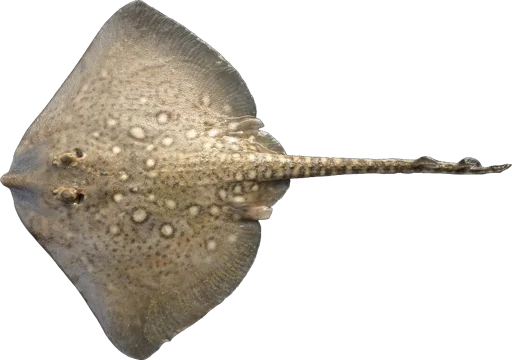
- Scientific name
- Raja clavata
- Group
- Sharks & Rays
- Rarity
- Rare
- Where to see it
- Mediterranean, Temperate Atlantic / English Channel
- Conservation status (IUCN)
- Near threatened
Did you know?
Its back and tail bristle with curved, hook-like spines that give it its name, and females can store a male's sperm for months before fertilizing their eggs.
What defines this group — Sharks & Rays
The cartilaginous fish: not a single bone in the body, a skeleton made entirely of cartilage.
- A cartilage skeleton, lighter and more flexible than bone.
- No gill cover: five to seven gill slits open on the sides or underneath.
- Pores on the snout — the ampullae of Lorenzini — pick up the electric field of prey.
Other species in this group
- Common stingray
- Blacktip reef shark
- Small-spotted catshark
- Common torpedo ray
- Bluespotted ribbontail ray
- Spiny dogfish