Leatherback turtle
Dermochelys coriacea
- Scientific name
- Dermochelys coriacea
- Group
- Sea turtles
- Rarity
- Epic
- Where to see it
- Mediterranean, Caribbean & Tropical Atlantic
- Conservation status (IUCN)
- Vulnerable
Did you know?
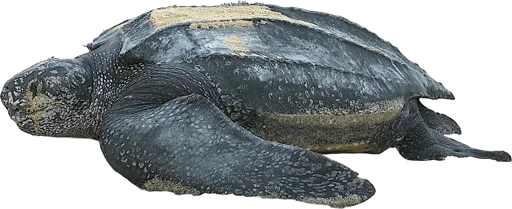
The leatherback is the largest sea turtle in the world and the only one without a hard shell, having a leathery skin instead; it can dive more than 1,000 meters deep to hunt jellyfish.
What defines this group — Sea turtles
Reptiles that went back to the sea: they breathe air and return to lay eggs on the beach where they hatched.
- Lungs, not gills: they have to surface to breathe.
- The front limbs have become paddles, and the shell can no longer tuck them away.
- Females find their way back to their birth beach, sometimes across thousands of kilometres.
Other species in this group
- Green sea turtle
- Loggerhead turtle
- Hawksbill turtle
- Olive ridley turtle
- Flatback turtle
- Kemp's ridley turtle