Cratena nudibranch
Cratena peregrina
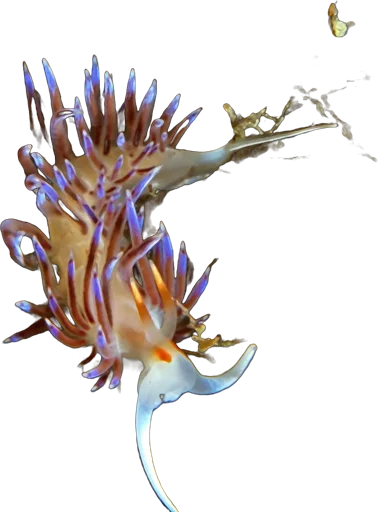
- Scientific name
- Cratena peregrina
- Group
- Nudibranchs & Molluscs
- Rarity
- Rare
- Where to see it
- Mediterranean
- Conservation status (IUCN)
- Not evaluated
Did you know?
The cratena nudibranch feeds on stinging hydroids and recycles their venomous cells intact, storing them in the colorful spiky projections on its back as a borrowed weapon.
What defines this group — Nudibranchs & Molluscs
Sea snails, with or without a shell — nudibranchs traded theirs for warning colours.
- “Nudibranch” means naked gills: the plume on the back is their breathing apparatus.
- Two rhinophores on the head act as a nose, following scent trails.
- Many recycle the venom of their prey — anemones, hydroids — for their own defence.