Great white shark
Carcharodon carcharias
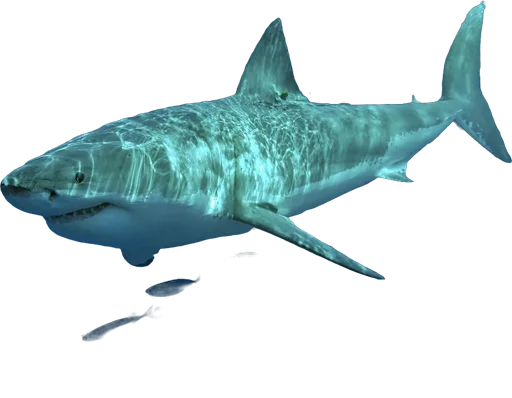
- Scientific name
- Carcharodon carcharias
- Group
- Sharks & Rays
- Rarity
- Legendary
- Where to see it
- Cold / polar waters
- Conservation status (IUCN)
- Vulnerable
Did you know?
The great white shark can detect the faint electrical field generated by a prey's heartbeat using sensory organs on its snout. It can also keep parts of its body warmer than the surrounding water, an unusual trait among fish.
What defines this group — Sharks & Rays
The cartilaginous fish: not a single bone in the body, a skeleton made entirely of cartilage.
- A cartilage skeleton, lighter and more flexible than bone.
- No gill cover: five to seven gill slits open on the sides or underneath.
- Pores on the snout — the ampullae of Lorenzini — pick up the electric field of prey.
Other species in this group
- Common stingray
- Blacktip reef shark
- Small-spotted catshark
- Common torpedo ray
- Bluespotted ribbontail ray
- Thornback ray