Phyllidia nudibranch
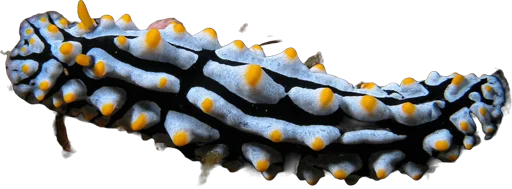
Phyllidia varicosa
- Scientific name
- Phyllidia varicosa
- Group
- Nudibranchs & Molluscs
- Rarity
- Common
- Where to see it
- Indo-Pacific & Red Sea
- Conservation status (IUCN)
- Not evaluated
Did you know?
The phyllidia nudibranch flaunts bright colors to warn predators that it's toxic, absorbing chemical compounds from the sponges it eats and storing them in its skin.
What defines this group — Nudibranchs & Molluscs
Sea snails, with or without a shell — nudibranchs traded theirs for warning colours.
- “Nudibranch” means naked gills: the plume on the back is their breathing apparatus.
- Two rhinophores on the head act as a nose, following scent trails.
- Many recycle the venom of their prey — anemones, hydroids — for their own defence.