Silky shark
Carcharhinus falciformis
- Scientific name
- Carcharhinus falciformis
- Group
- Sharks & Rays
- Rarity
- Rare
- Where to see it
- Indo-Pacific & Red Sea, Caribbean & Tropical Atlantic
- Conservation status (IUCN)
- Vulnerable
Did you know?
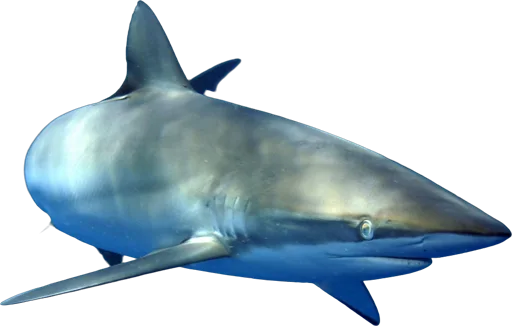
The silky shark gets its name from the unusually smooth texture of its skin. It often follows schools of tuna in the open ocean, which also makes it one of the species most frequently caught as bycatch in tuna fisheries.
What defines this group — Sharks & Rays
The cartilaginous fish: not a single bone in the body, a skeleton made entirely of cartilage.
- A cartilage skeleton, lighter and more flexible than bone.
- No gill cover: five to seven gill slits open on the sides or underneath.
- Pores on the snout — the ampullae of Lorenzini — pick up the electric field of prey.
Other species in this group
- Common stingray
- Blacktip reef shark
- Small-spotted catshark
- Common torpedo ray
- Bluespotted ribbontail ray
- Thornback ray