Basking shark
Cetorhinus maximus
- Scientific name
- Cetorhinus maximus
- Group
- Sharks & Rays
- Rarity
- Legendary
- Where to see it
- Temperate Atlantic / English Channel, Cold / polar waters
- Conservation status (IUCN)
- Endangered
Did you know?
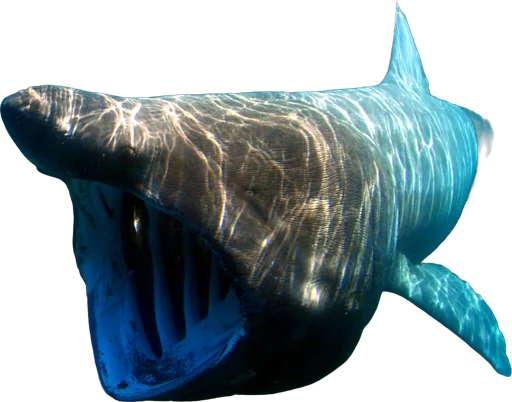
The basking shark is the second-largest fish in the world, sometimes exceeding 10 meters, yet completely harmless — it feeds by filtering plankton through its huge gills while swimming slowly with its mouth wide open. It can filter nearly 2,000 tons of water per hour.
What defines this group — Sharks & Rays
The cartilaginous fish: not a single bone in the body, a skeleton made entirely of cartilage.
- A cartilage skeleton, lighter and more flexible than bone.
- No gill cover: five to seven gill slits open on the sides or underneath.
- Pores on the snout — the ampullae of Lorenzini — pick up the electric field of prey.
Other species in this group
- Common stingray
- Blacktip reef shark
- Small-spotted catshark
- Common torpedo ray
- Bluespotted ribbontail ray
- Thornback ray